|
E-Newsletter • November 2025 |
▼ ADVERTISEMENT


Editor's E-Note
When managed properly, diabetes can be treated with relative ease. However, complications can arise when factoring in age-related deterioration of the body. This month’s exclusive dives into diabetes treatment among frail, older adults, specifically how to treat it without “doing too much.”
In addition to reading our e-newsletter, be sure to visit Today’s Geriatric Medicine’s website at www.TodaysGeriatricMedicine.com, where you’ll find news and information that’s relevant and reliable. We welcome your feedback at TGMeditor@gvpub.com. Follow Today’s Geriatric Medicine on Facebook and X, formerly known as Twitter, too.
— Josh Hildebrand, editor |
|
|
|
▼ ADVERTISEMENT
 |
▼ ADVERTISEMENT

Do No Harm: Rethinking Diabetes, Hypertension in Frail Older Adults
Effectively managing chronic conditions like diabetes and hypertension can greatly improve quality of life, reduce complications, and extend longevity for older adults. However, when treatment becomes overly aggressive, it can do more harm than good. Every day, thousands of vulnerable older adults in the United States are harmed by intensive management of these conditions—resulting in dangerously low blood sugar or blood pressure, emergency visits, hospitalizations, disability, or even death. These harms are preventable and often stem from well-intentioned but excessive medical care.
Despite clear guidelines promoting cautious, individualized care—especially for frail older adults and nursing home residents—these complications remain alarmingly common.
Joseph G. Ouslander, MD, a professor of geriatric medicine at Florida Atlantic University’s Charles E. Schmidt College of Medicine, and his collaborator have published a paper in the Journal of the American Geriatrics Society calling for urgent change in how health care providers are supported and held accountable. They argue that physicians, nurse practitioners, and physician assistants prescribing diabetes and hypertension medications should be actively encouraged—not merely expected—to avoid overtreatment through carefully designed quality measures.
“These preventable complications, including dangerously low blood sugar and blood pressure, often result from well-intended medical care that overlooks a patients’ age, health status, or life expectancy,” says Ouslander, senior author. “We need better approaches that reward appropriate, personalized care. These measures should prioritize safe, evidence-based, personalized care rather than rigid targets that can cause harm.”
▼ ADVERTISEMENT
 |
Glucagon and Aging
Researchers at the University of Arizona College of Medicine, Tucson, recently discovered a link between glucagon and slower aging. Initial tests were conducted on aging mice, but human trials are underway. Their research is published in GeroScience.
Fighting Alzheimer’s by Walking
Walking has demonstrable benefits in numerous ways. Research published in Nature Medicine reveals an additional benefit: slowing the rate of cognitive decline, which can lead to Alzheimer’s disease.
Reducing Social Isolation
Social isolation has devastating impacts, especially among older adults. For that reason, researchers are devising ways to mitigate social isolation while also implementing cost-effective training on the subject matter for university students.
Blood Pressure Fluctuations Affect Brain Health
Blood pressure fluctuations may lead to brain deterioration, according to research published in the Journal of Alzheimer’s Disease. The research suggests that emphasizing cardiovascular health could be key in preventing dementia. |
WellSky Launches AI-Powered Ambient Listening for Specialty Care EHR
WellSky has launched an AI-powered ambient listening feature within its Specialty Care EHR solution for specialty care settings such as behavioral health, rehabilitation, and long-term acute care facilities. The WellSky Ambient Listening solution automatically generates structured notes while clinicians speak with patients during visits, delivering secure, efficient, and intelligent documentation directly into providers’ clinical workflow. Learn more » |
|
|
COVER STORY
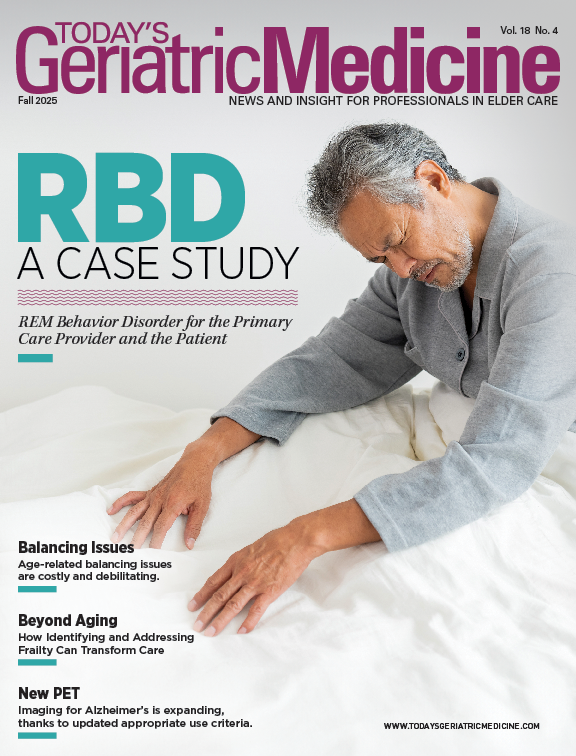
RBD: A Case Study
Older adults suffering from rapid eye movement behavior disorder act out their dreams, which can lead to injuring their bed partner. Gerontologists are working to destigmatize the disorder and help primary care physicians better understand how to treat it.
FEATURE
Balancing Issues
Balancing issues affect many older adults. Despite this, these issues are often hard to diagnose and harder to treat. Thanks to emerging technology, balancing issues may be a thing of the past.
|
|
|
| Advertising Opportunities |
Have a product or service you want to market to geriatric care professionals? Utilize the reach of Today's Geriatric Medicine Magazine to accomplish your marketing goals. Email our experienced account executives today at sales@gvpub.com or call 800-278-4400 for more information.
|
| © 2025 Today's Geriatric Medicine Magazine |
|
|